Most commercial painting contractors in Annapolis will promise your office a paint job with no disruption. That promise breaks the moment a drop cloth hits the lobby floor at 9 a.m. on a Tuesday. Real commercial interior painting in Annapolis, MD, is not invisible. It is planned and scheduled around your workday, and quiet enough that your business keeps running.
Here is the part that painting companies leave off their websites. According to the U.S. Environmental Protection Agency, indoor VOC levels can spike to 1,000 times the outdoor background level during and immediately after a paint job. That is an air quality issue that your employees and clients can feel within an hour. So when a contractor sells you “zero disruption” without explaining fumes, scheduling, dust, and daily updates, they are selling you a slogan.
This article breaks down what low-disruption commercial interior painting in Annapolis, MD, really involves. We will cover why low-VOC paint and after-hours painting matter, and how to vet commercial painters before you sign.

The Real Problem With “Zero Disruption” Promises
Annapolis is the capital. Law offices line West Street. Medical practices cluster off Forest Drive. Financial advisors sit near Bestgate. Government contractors serve the Naval Academy and state agencies. So the city runs on offices that cannot pause for a paint crew. If your reception looks tired, you cannot close for a week.
And the “without mess” pitch does not hold up under simple math. Commercial interior painting in Annapolis, MD, involves moving furniture, masking trim, covering floors, prepping walls, priming, applying two coats, and curing. Done well, that takes real space and real time. A contractor who claims there is no disruption is either lying or cutting corners. Both cost you more later.
But the honest version is different. Honest commercial painting contractors in Annapolis will tell you the work will create some noise and smell, and will require limited access on certain days. Then they hand you a schedule that confines all of that to nights, weekends, or one office wing at a time. That is what low-disruption office painting looks like.
What Low-Disruption Commercial Interior Painting in Annapolis, MD Looks Like
A real low-disruption interior painting plan has five parts.
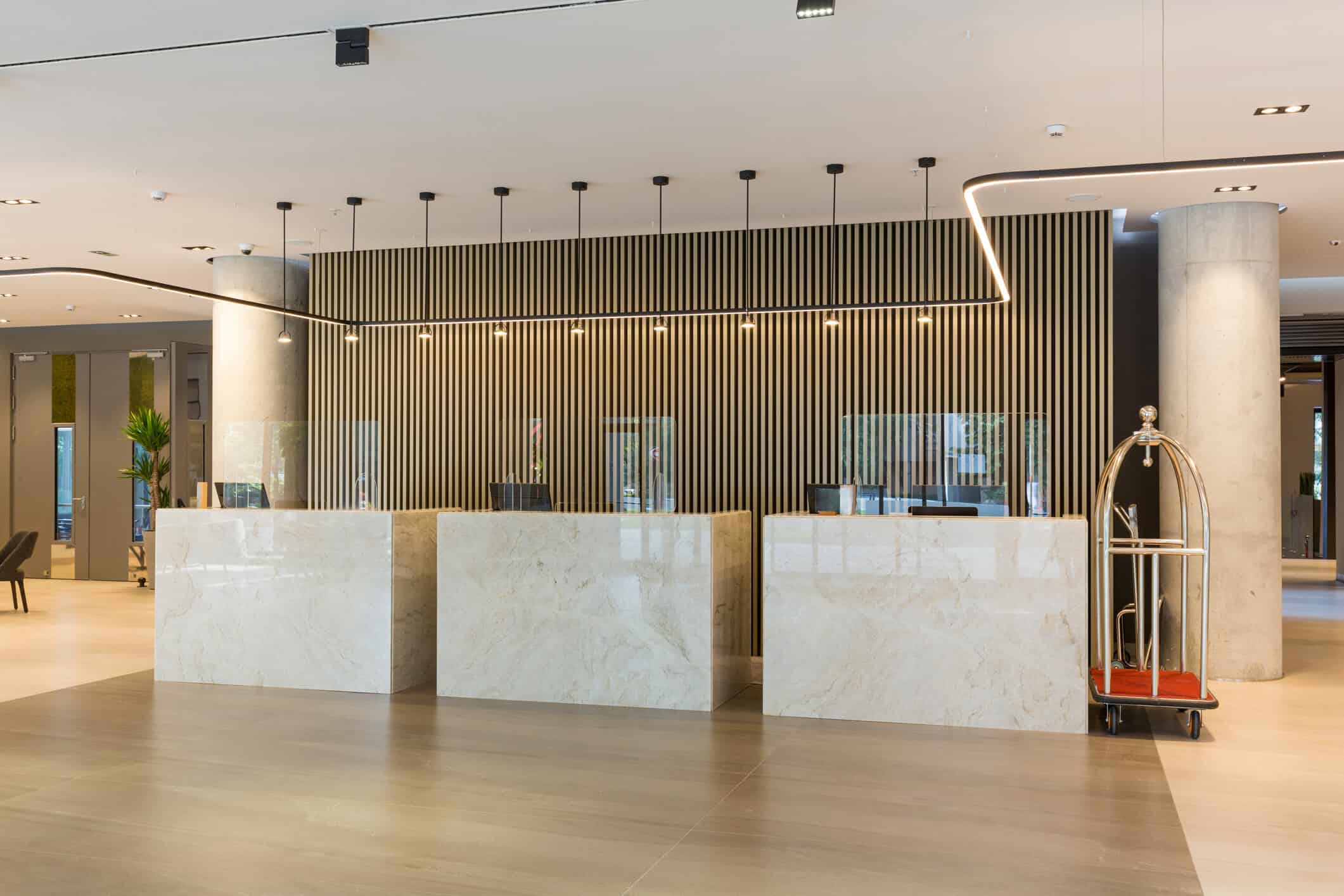
When the right commercial painters plan a project for a professional Annapolis office, they build it around your business calendar. Not the painting crew’s calendar. An OSHA-certified team handles the heavy work between 6 p.m. and 6 a.m. when it fits your schedule. Then they break the room down so your team walks into a clean workspace each morning.
Why Low-VOC Paint Matters More in an Occupied Office
VOCs are chemicals that off-gas from paint as it dries. The EPA’s office building indoor air quality guidance notes that indoor air can contain VOC levels up to 10 times those outdoors before painting starts. And when standard paint goes on in an occupied space, EPA data show that levels can briefly reach a thousand times the outdoor background.
So low-VOC paint is the default for any good commercial painters team working in offices, medical practices, dental offices, or client-facing retail. Under 40 CFR Part 59, the federal VOC cap for interior flat paint is 250 grams per liter. A low-VOC paint runs under 50 grams. That is five times tighter than the federal cap. The smell fades faster. The re-entry window shrinks from days to hours. And staff with asthma or chemical sensitivities are protected.
This is the kind of detail any of the commercial painting contractors in Annapolis you call should be able to name on the spot. If your bidder cannot tell you the VOC content of the paint they plan to use, they have not specified the project. They have written you a price.
After-Hours Painting and Phased Schedules: The Real Math
For most office painting projects in Annapolis, the simple answer is to paint when nobody is there. After-hours painting between 6 p.m. and 6 a.m. allows a crew to work 12 uninterrupted hours per shift. That is faster than three or four hours of squeezed weekday access around meetings and phone calls.
But phased painting is the other option when a 24-hour facility cannot fully clear out. The crew completes one wing at a time. Dust barriers separate the active work zone from occupied space. So operations continue in the rest of the building. The trade-off is a longer total calendar, but no business interruption.
Most low-disruption commercial interior painting projects in Annapolis, MD, use a hybrid approach. Lobbies, conference rooms, and hallways get painted after hours. Private offices and break rooms get phased out during weekdays when their people are out. And the best commercial painting contractors in Annapolis will recommend a mix based on your floor plan, staff schedule, and client traffic.
How to Vet Commercial Painters Before You Sign
Three checks separate serious commercial painting contractors in Annapolis from the rest.
Apply these three checks to any bidder doing commercial interior painting in Annapolis, MD.
What Annapolis Office Painting Costs You in Downtime, Not Just Dollars
The real cost of a poorly run office painting project is not the line on the invoice. It is the lost work. The employee complaints. The client meeting was moved because the conference room smells like paint. The tenant renewed elsewhere because your lobby was a construction zone for two weeks.
EPA estimates that poor indoor air quality costs U.S. businesses tens of billions of dollars in lost productivity per year. So, add a sloppy paint job that drags out for ten days with no updates, and the damage stacks. The point of hiring a real painting partner is to make the project disappear into the background of a normal work week. That is a process choice, not luck.
The best commercial painting contractors in Annapolis have completed more than 150 commercial interior painting projects across the Baltimore-Annapolis corridor. They back the work with a 1-year workmanship warranty. A single owner-operator stays responsible for every job. Local accountability, written standards, and a calendar that flexes around your business.