In a busy warehouse, the same few feet of floor take a beating every shift. So your choice of warehouse floor coating shows up later as either a quiet line item or a repair bill that keeps coming back. Two options come up most often. One is commercial epoxy flooring. The other is a plain coat of concrete paint. Both go down on the same slab. But they do not wear the same way. And that gap lands right in your maintenance budget.
Here is the honest part. The pricier floor is not always the right floor. Sometimes paint makes sense. And sometimes it is money you spend twice. So this post breaks down durability, cost, and the jobs each option is built for. That way you can choose with clear eyes, not off a sales pitch.

What Happens After Year One
On day one, both floors can look sharp. But the split shows up after months of traffic. Painted concrete usually goes on thin, around two to four mils. That is about the thickness of a sheet of paper. So it sits on top of the slab and wears off fast where people walk and wheels turn. In a busy warehouse, that can mean a new coat every one to three years. And the chemical resistance is weak, so oil, grease, and cleaners chew through it.
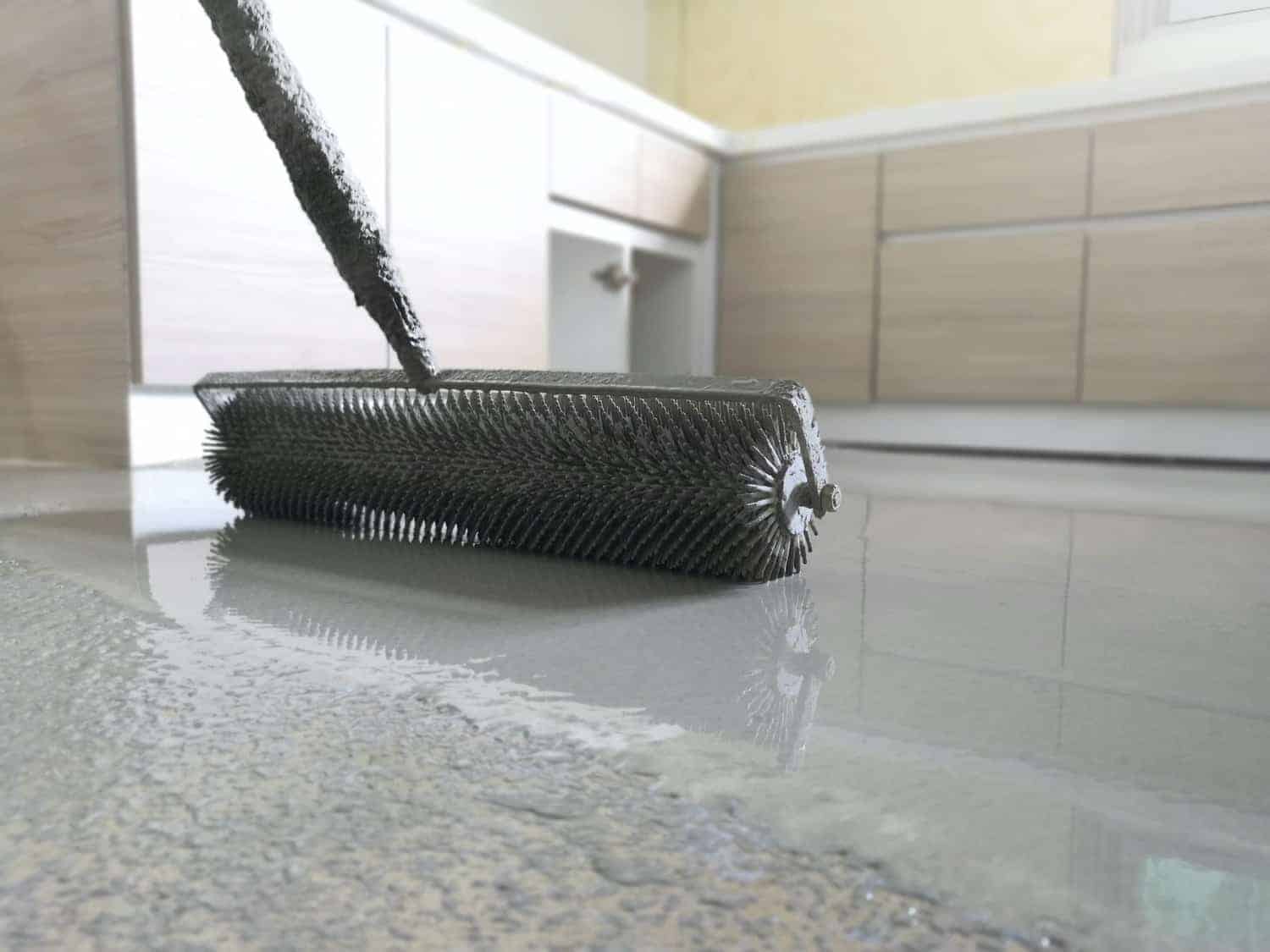
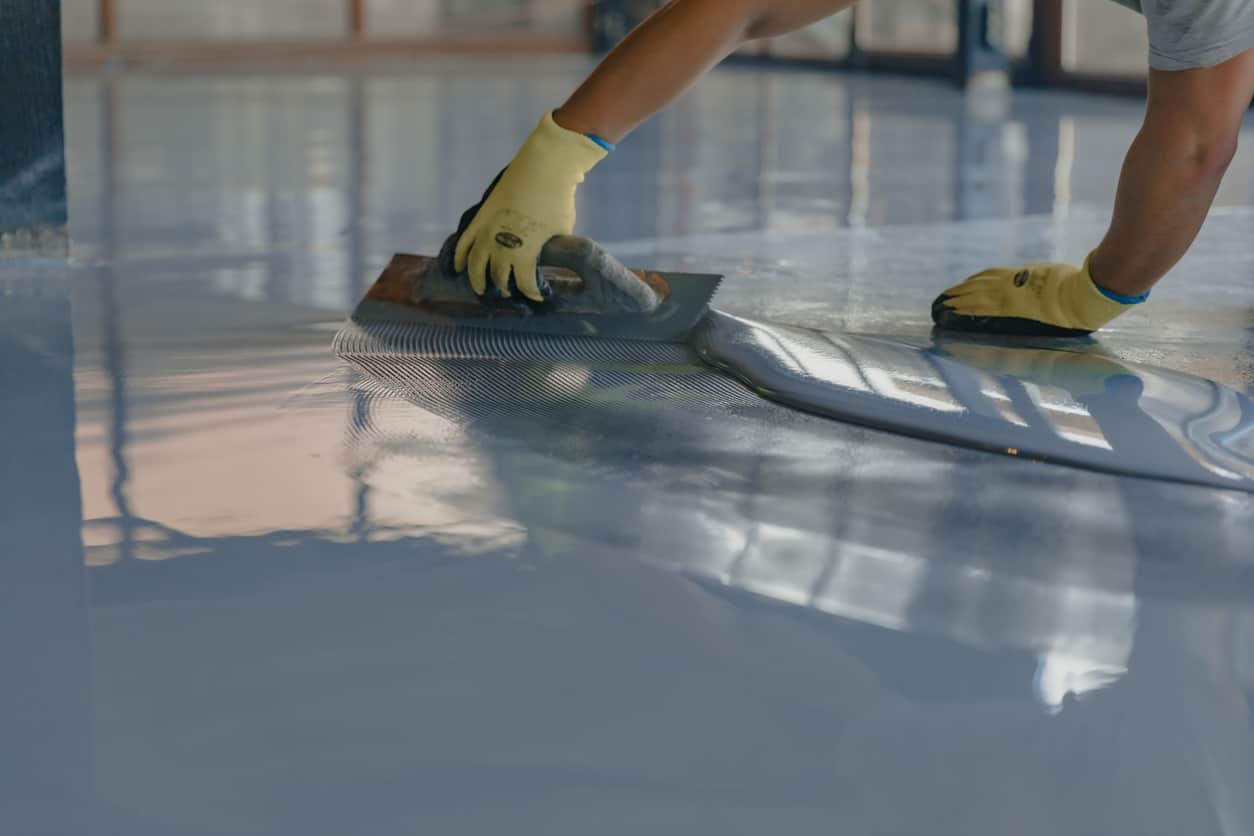
Epoxy works in a different way. It bonds into the concrete instead of resting on it. So a commercial system runs much thicker, often ten to twenty mils or more. That build is why these floors can last ten to fifteen years under daily forklift use. Think about the load for a second. A standard forklift can weigh 9,000 pounds or more. And all of that pushes through small, hard tires onto a few square inches at a time. Paint cannot take that for long. But a bonded coating can.
Still, no floor lasts forever. High-traffic lanes wear first, near turns, dock doors, and staging areas. But here is the good news. You can recoat just those lanes instead of the whole building. So your trucks keep moving and your repair bill stays small.
What Commercial Epoxy Flooring Costs Next to Painted Concrete
Sticker price is where paint wins, and it is not close. A basic painted concrete floor can run one to two dollars per square foot in materials. Commercial epoxy flooring usually lands around three to eight dollars per square foot installed. But warehouse-scale jobs often sit on the lower end of that range, because the setup cost spreads across more floor.
So paint is the cheaper choice, right? Only if you stop the clock at year one. Picture a 10,000 square foot floor. You paint it cheap. Then you recoat it five or six times across a decade as it wears. And you add labor plus lost hours every single time. Now set that next to one epoxy install that holds for ten years or more. The floor that looked cheaper can quietly turn into the expensive one.
That is the math most floor decisions skip. The real question is not what a floor costs to put down. The question is what it costs to keep.
Match the Floor to the Job
Here is where plenty of contractors push the priciest option no matter what. We would rather be straight with you.
Painted concrete can be a fair pick when:
Commercial epoxy flooring tends to earn its cost when:
Safety belongs on this list too. Federal rules ask employers to keep walking and working surfaces in safe condition. And a worn, slick floor is a real hazard near busy aisles. But epoxy can take slip-resistant additives that give boots and wheels more grip. That counts for a lot in wet or high-speed zones.
The Prep Matters More Than the Label
Here is the part the brochures leave out. Roughly 80 percent of coating failures come from poor surface prep, not from a bad product. So if a crew skips the grinding, ignores moisture, or coats over old flaking paint, even strong epoxy will peel within months.
Real prep takes work. It means cleaning the floor down to sound concrete, usually by grinding or shot blasting. Then it means fixing cracks and checking for moisture rising up through the slab. A Baltimore warehouse near the water can hold more moisture than you would expect. And that alone can lift a coating that was rushed. Product choice still matters. But the work under the coating decides how long the floor lasts.
This is also where low-odor, low-VOC coatings help. They let a crew work with less disruption to your people and your air. So a floor can go down without shutting your operation down for a week.
How DN Contracting Helps You Choose
You should not have to become a coatings expert to make this call. That is our job. DN Contracting is a licensed and insured, PCA-accredited contractor based in Baltimore. We bring 50+ years of combined experience and 150+ commercial projects across Maryland. So we look at how your space actually runs before we quote a single dollar. Our commercial epoxy floors come in solid, flake, and metallic systems, matched to your traffic and your budget.
Our plan is simple:
So there is no pressure to buy the most expensive option on the shelf. And with our no-surprise quote, the price we give you is the price you pay. Just a floor matched to how you work, with a clear reason behind every call.