
Every commercial building in Baltimore City, MD, accumulates paint inventory over time. Interior commercial painting across office suites, retail spaces, medical facilities, and multi-tenant properties generates surplus after nearly every project. Those partial buckets and five-gallon drums end up on maintenance room shelves, in storage cages, or lined up along basement corridors — labeled if you’re lucky, mystery colors if you’re not. When the next corridor refresh or tenant turnover hits, the first instinct is to reach for what’s already on hand. But how to reuse leftover paint in a commercial setting requires more scrutiny than most facility teams realize, because the consequences of applying degraded product in a business environment go far beyond aesthetics.
The Pressure Behind the Decision
Managing a commercial property means balancing budgets, timelines, and tenant expectations — constantly. When a hallway needs refreshing or a vacated suite requires a quick turn, the math on using existing inventory looks attractive. Why order a new product when eight cans are already sitting in storage?
That logic makes sense until the product goes on the wall and fails. In a commercial space, failed paint means more than an eyesore. It means disrupted tenants, rescheduled work, wasted labor hours, and a maintenance team pulled off other priorities to fix something that should have been right the first time. Interior commercial painting at scale compounds mistakes because the square footage is larger, traffic is heavier, and the margin for error is thinner.
The real issue isn’t whether leftover paint exists. It’s whether anyone on the team knows how to evaluate it before committing labor and downtime to a product that might not perform.
How to Reuse Leftover Paint in Commercial Settings: 5 Evaluation Steps
Commercial painters working on occupied properties follow a qualification process for stored products. These five steps mirror that approach and give facility managers a reliable framework for making the call before a single roller hits the wall.

When the Paint Is Bad: 6 Indicators That Disqualify Stored Product
Not every container in your maintenance inventory is still usable. These six conditions represent clear failure points — and in a commercial setting, forcing a failed product into service creates problems that ripple through your operation.
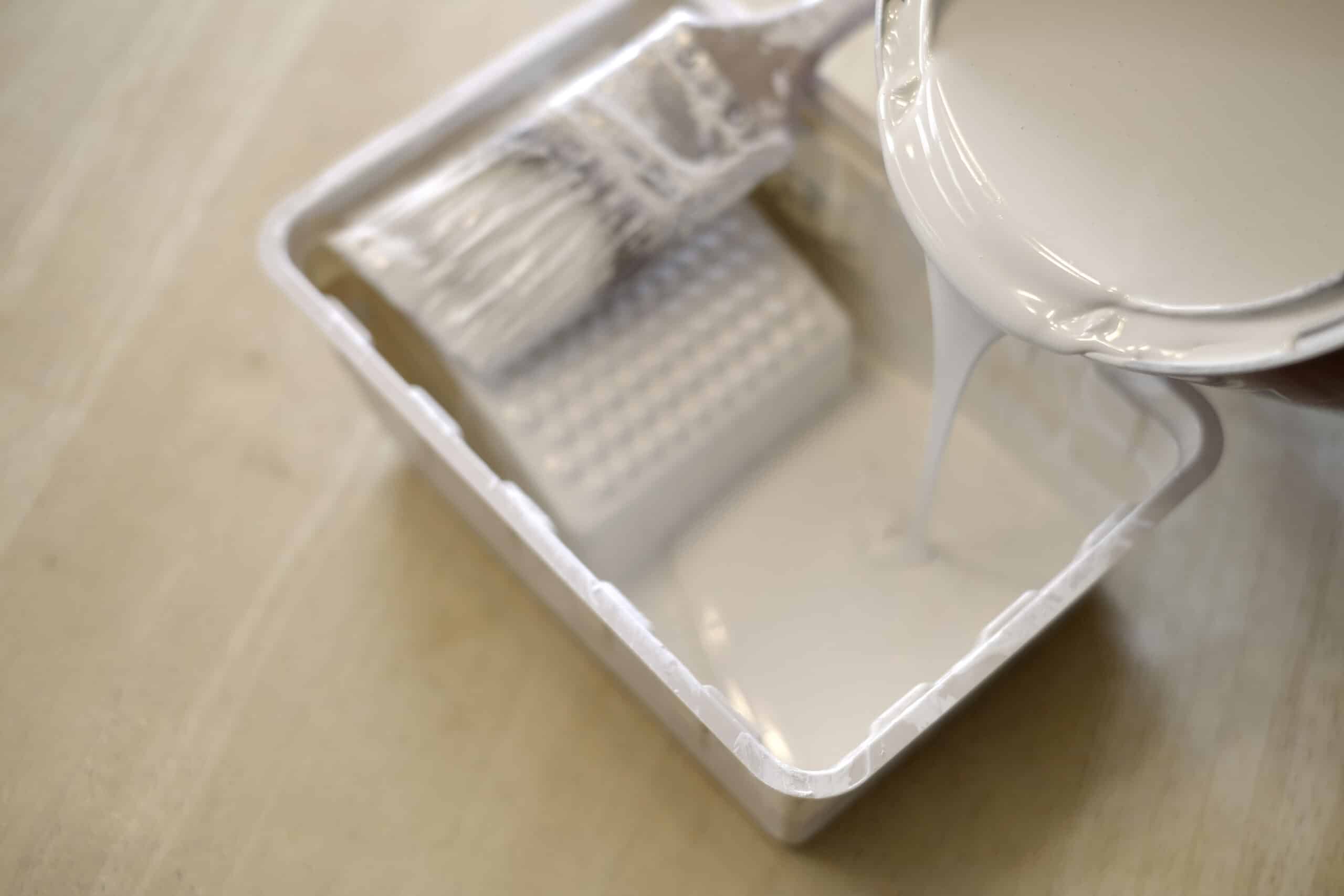
Commercial Paint Disposal in Baltimore City, MD
When a stored product fails evaluation, proper disposal protects your property and your compliance record. Commercial paint waste cannot be poured into building drains, dumpsters, or storm water systems — violations carry penalties under both Baltimore City ordinances and Maryland Department of the Environment regulations.
Baltimore City schedules periodic Household Hazardous Waste collection events open to residents and small-quantity generators. For larger commercial volumes, licensed hazardous waste transporters handle pickup and certified disposal. Water-based latex products in small quantities can be solidified using commercial paint hardening agents, then disposed of through standard waste channels once fully cured.
Reusing leftover paint responsibly in a commercial context means building disposal protocols into your maintenance planning. Interior commercial painting across Baltimore City, MD, commercial properties generates surplus after every scope of work, and having a documented disposal procedure prevents accumulation, reduces liability, and keeps storage areas organized for the product that actually works.
When Professional Commercial Painters Are the Right Call for Your Property
Minor spot corrections — scuffs from furniture moves, marks left by signage removal, small patches after electrical work — are reasonable candidates for in-house touch-ups with verified stored products. That’s how to reuse leftover paint efficiently on a commercial property without pulling the budget for outside labor.
But tenant turnovers, common-area refreshes, multi-floor corridor work, and full-suite repaints fall into a different category entirely. These scopes demand consistent product quality, coordinated scheduling around building operations, and execution speed that minimizes disruption to occupied spaces. Old products from a maintenance closet don’t deliver reliability at that scale. Sheen levels degrade in storage. Color accuracy drifts. And running a short mid-project in a commercial hallway leaves a demarcation line that everyone walking through the building will see.
Professional commercial painters serving building owners bring current product from verified inventory, surface preparation systems rated for commercial substrates, and the crew depth to complete work within tight operational windows. Commercial painters on contract also carry proper insurance, coordinate with building management on access and scheduling, and deliver documentation that property managers need for tenant communication and record-keeping. How to reuse leftover paint matters for maintenance — but for scope work that affects tenant experience and property value, professional execution pays for itself in avoided callbacks, faster lease-ready turnovers, and a finished product that holds up under commercial-level wear.

What Well-Maintained Interiors Communicate to Tenants and Visitors
Commercial interiors operate as a silent but constant signal about how a property is managed. Prospective tenants touring a building can register wall conditions within seconds. Current tenants form opinions about ownership responsiveness, in part, based on whether common areas look maintained or neglected. Visitors, clients, and customers who walk into a business form an impression of it based on the space it occupies.
When facility teams understand how to reuse leftover paint correctly — and when building owners bring in professional commercial painters for work that stored product can’t handle — the result extends beyond clean walls. It reinforces that the property is managed with intention, that tenant experience matters, and that the ownership group invests in the building’s long-term condition.
In Baltimore City, MD’s competitive commercial real estate environment, that kind of visible care affects lease rates, retention, and reputation in ways that paint costs alone will never capture.
Sitting on stored paint inventory and not sure what’s still viable for your next commercial project?
DN Contracting works with facility managers and property owners in Baltimore City, MD, to evaluate existing products, match colors precisely, and execute interior repaints that meet the demands of occupied commercial spaces. One conversation gives you a clear scope, an honest timeline, and a number you can plan around.